Whistling what we deny
Ever walk past a cemetery late at night?
That chill you feel is older than language itself. Fear. And somewhere in America's long love affair with optimism, someone decided the antidote was to whistle. Project confidence. Fake boldness until it became real.
It worked well enough that the phrase stuck. Whistling past the graveyard.
But the meaning quietly flipped. Somewhere along the line, the meaning changed. It stopped meaning "courage" and started meaning "denial.”
We do this now—but only in one direction.
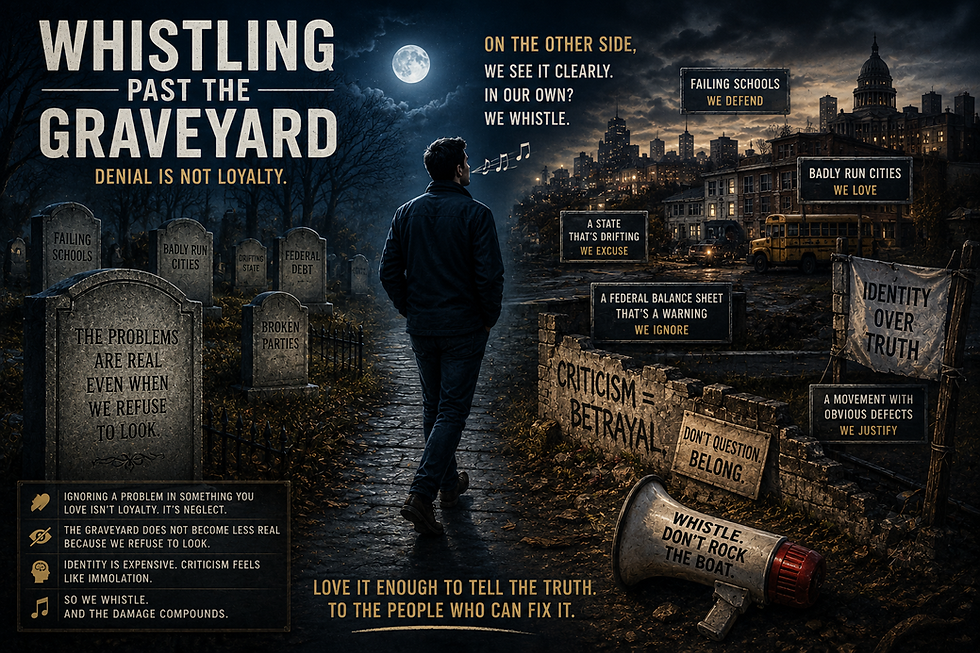
The school we defend is failing. The city we love is badly run. The state is drifting. The federal balance sheet is a warning. The political movement we identify with has obvious defects.
We can see all this instantly in other people’s institutions.
In our own? We whistle.
Here's what makes that strange: Ignoring a problem in something you love isn't loyalty. It’s neglect. The graveyard does not become less real because we refuse to look at headstones.
So why do people do this so reliably?
Maybe because identity is expensive. Once a place, institution, or ideology becomes part of who we are, criticism feels like immolation.
And so, we whistle.